The $400 Wardrobe: How Thrift-First Families Are Quietly Opting Out of Fast Fashion
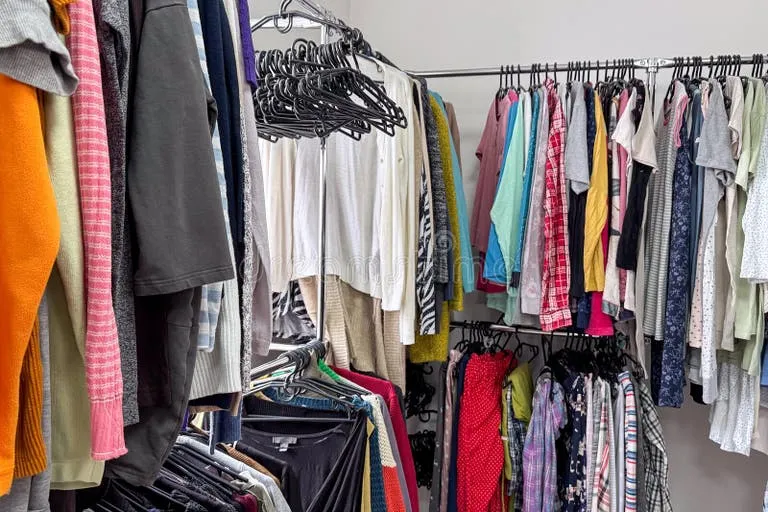
Photo: rack of colorful secondhand clothes in thrift store, via thumbs.dreamstime.com
Let's do some quick math. The average American family spends well over $1,000 a year per person on clothing, and kids outgrow most of theirs before it shows any wear. Now meet the households doing it differently: a closet stocked almost entirely secondhand, an annual clothing budget that would make a fast-fashion executive wince, and — the kicker — better-built clothes than their mall-shopping friends.
This isn't about deprivation. It's about a system. Here's how the thrift-first crowd does it.
Rule One: Kids First, Because It's Easiest
Children's clothing is the gateway drug of secondhand living. Kids wear things for one season. Much of what hits consignment shops has been worn a handful of times, sometimes never — grandparents buy sizes ahead, growth spurts happen, tags come off nothing.
Local consignment shops and seasonal consignment events (Just Between Friends and similar sales run in most metro areas) let you outfit a kid for a season at 10–20% of retail. Facebook Marketplace and Buy Nothing groups handle the rest. If you're near a Kids' resale chain like Once Upon a Child, a quick outgrown-clothes trade-in can fund the next size up for nearly free.
Rule Two: Shop Where the Good Stuff Gets Dumped
Not all thrift stores are equal, and geography is destiny:
- Goodwill bins (the Goodwill Outlet) — sold by the pound, this is where serious resellers and budget hunters converge. Bring gloves and patience.
- Church rummage sales and estate sales — older donors mean older, better-built garments: wool, all-cotton, real leather.
- Small-town thrift stores — lower traffic, lower prices, less picked-over. Worth a detour on any road trip.
- Online resale — Poshmark and Mercari for specific brands, ThredUp for bulk browsing, Facebook Marketplace for local hauls.
Rule Three: Learn to Read a Garment in Ten Seconds
Quality-spotting is a learnable skill, and it's what separates people who find $8 cashmere from people who find pilled polyester. Check:
- The fabric tag. Natural fibers — cotton, wool, linen, silk — wear better and last longer than synthetics. A 100% wool sweater for $6 is a heist.
- The seams. Pull them gently. Tight, straight stitching with no gaps means the garment was built to survive. French seams and bound edges are hallmarks of quality construction.
- The brand. You'll quickly develop a mental list of legacy makers — LL Bean, Pendleton, Carhartt, vintage Levi's — that were engineered for decades, not seasons.
- The weight. Heavier fabric generally means more fabric. Pick it up. Cheap clothes feel cheap.
The Boring Stuff Is Where the Value Is
Here's the sleeper play nobody talks about: durable, unglamorous goods hold value shockingly well. A used cast iron skillet, a solid-wood dresser, a well-made backpack, tools with lifetime warranties — these things barely depreciate. Buy them secondhand, use them for a decade, and often you can resell them for what you paid.
Fast fashion, by contrast, is a depreciating asset the moment you leave the store. Which one sounds like the smarter purchase?
The Planet Math Nobody Calculates at Checkout
The fashion industry is one of the world's largest industrial water consumers and carbon emitters, and Americans discard roughly 80-plus pounds of textiles per person per year — most of it landfilled or shipped overseas. Every secondhand purchase is a garment that skips that entire supply chain: no new cotton fields, no dye houses, no container ship.
A family of four buying secondhand for a year keeps hundreds of garment-lifetimes going. It's one of the largest environmental levers an ordinary household has, and it requires zero sacrifice — arguably the opposite.
Start This Weekend
You don't have to swear off retail forever. Try this: pick one category — kids' clothes, work pants, winter coats — and commit to secondhand-only for that category for six months. Set a total budget of $100. Hit one consignment event and one estate sale.
Most people who try this discover the same thing the thrift-first crowd already knows: the $400 wardrobe isn't a compromise. It's an upgrade you got paid to make.