The Silent Power Drain Hiding in Plain Sight — And What It's Costing You Every Single Month
Picture your bedroom at 2 a.m. You're asleep. The lights are off. Nothing is running — at least, that's what you think. But your cable box is humming. Your phone charger is sipping current even though your phone isn't plugged in. Your smart speaker is listening. Your old printer is waiting. Your TV is in a kind of digital limbo it calls "standby."
None of them are doing anything useful. All of them are burning power.
This phenomenon has a name: phantom load, sometimes called vampire power or idle current. And according to the U.S. Department of Energy, it accounts for roughly 5 to 10 percent of the average American household's electricity use — costing the typical home between $100 and $200 every year, for absolutely nothing.
Across the country, that adds up to more than $19 billion in wasted electricity annually. The carbon math is just as grim.
Why "Off" Doesn't Mean Off Anymore
Here's the thing: most modern electronics never fully power down. They're designed to wake up fast, respond to remote signals, push software updates, and maintain network connections around the clock. Convenient for you? Sure. Efficient? Absolutely not.
This design philosophy took hold in the 1990s and has only deepened as our homes filled up with smart devices. Your TV needs to be ready to respond to a voice command. Your cable box needs to download the overnight program guide. Your gaming console needs to check for updates. Your router — well, the router actually needs to stay on. But everything else? Not so much.
The result is a home that never actually rests.
The Worst Offenders, Ranked
Not all phantom loads are created equal. Some devices are barely a blip; others are shockingly hungry even when you think they're off. Here's a rough ranking of the most common culprits, based on data from the Lawrence Berkeley National Laboratory and the Natural Resources Defense Council:
-
Cable and satellite boxes — The undisputed champion of wasted standby power. A typical cable DVR can draw 15–30 watts continuously, running up roughly $30–50 per year just sitting there. Some older models draw nearly as much power in standby as when you're actively watching.
-
Game consoles — Left in sleep or quick-resume mode, consoles like the PlayStation 5 or Xbox Series X can draw 10–15 watts. That's before you factor in the controller chargers left plugged in.
-
Desktop computers and monitors — Even in sleep mode, a desktop setup can pull 5–20 watts depending on age and configuration. Older machines are dramatically worse.
-
Smart speakers and displays — Your Amazon Echo or Google Nest is always listening, which means it's always on. These typically draw 2–4 watts continuously — modest per device, but it adds up when you've got three of them scattered around the house.
-
Phone and tablet chargers (plugged in, nothing attached) — A phone charger left in the wall without a phone draws a small but real amount of power — typically 0.1 to 0.5 watts. Multiply that by four chargers and 8,760 hours a year, and it's not nothing.
-
Older televisions — LED TVs have improved dramatically, but older plasma and LCD sets can draw 5–15 watts in standby. If your bedroom TV is more than eight years old, it's probably costing you more than you'd guess.
-
Printers and all-in-one devices — These often draw 5–10 watts just waiting for a print job that may never come.
-
Microwaves — That little clock display and control panel draws a small but continuous load. Some microwaves use more electricity maintaining their clock over a year than they do actually heating food.
The Grid Problem Nobody Talks About
This isn't just a wallet issue — it's a climate issue. The electricity wasted on phantom loads in American homes generates millions of tons of carbon dioxide every year. And because standby power is a constant, flat draw rather than a peak-demand spike, it contributes to what grid operators call "baseload" — the floor of electricity that has to be generated around the clock, often by the least flexible (and sometimes dirtiest) power plants.
When we talk about greening the grid, we focus a lot on solar panels and wind farms. But reducing the floor of demand matters just as much as changing how we generate. Cutting phantom load is, in a very real sense, a climate act.
What You Can Actually Do About It
The good news: this is one of the most fixable problems in your home, and you don't need to own your place or spend a lot of money to fix it.
Smart power strips are your best friend. These strips detect when a "master" device (say, your TV) goes fully off and automatically cut power to connected devices (your cable box, your soundbar, your streaming stick). You plug in once, and the strip does the thinking for you. A decent one runs $25–40 and pays for itself within a few months.
Unplug chargers when they're not charging. It sounds almost embarrassingly simple, but it works. Keep a small basket near your outlet where you toss unplugged chargers — it makes the habit stick.
Put your cable box on a timer. If you're not watching TV between midnight and 6 a.m. (and you're probably not), a simple mechanical outlet timer can cut that box's power during those hours. Your guide will re-download in the morning. This alone can save meaningful money.
Enable aggressive sleep settings on your computer. Most Windows and Mac machines default to very lenient sleep timers. Go into your power settings and set displays to sleep after 2 minutes of inactivity and the system to sleep after 10. This dramatically cuts idle draw.
When you buy new, check the ENERGY STAR rating. Devices that carry the ENERGY STAR label for standby efficiency are certified to draw minimal power when idle. It's not a perfect system, but it's a meaningful filter when you're shopping.
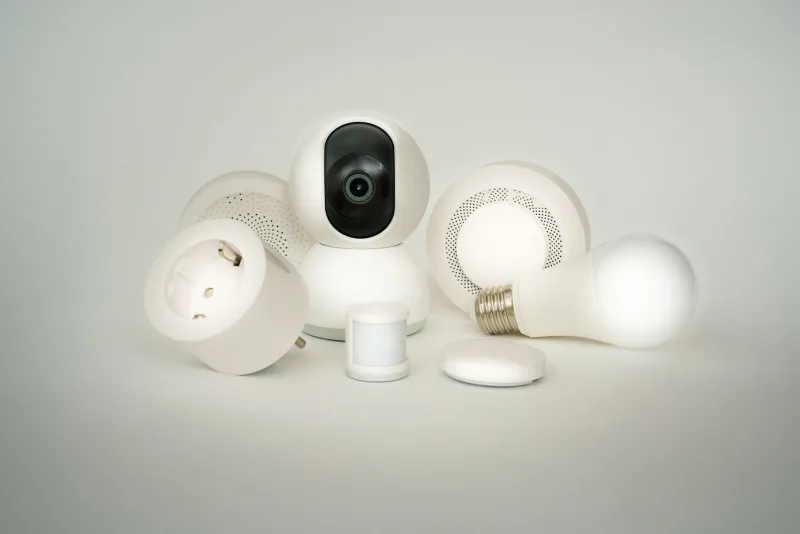
Consider a smart plug for the biggest offenders. A smart plug (around $10–15) lets you schedule power cuts to specific devices and monitor their actual energy use through an app. Plug your cable box or old TV into one and you'll finally see exactly what it's costing you — which is often enough motivation to change your habits for good.
A Small Change With a Real Impact
None of this requires a major lifestyle overhaul. You don't need to rewire your home or spend thousands on new appliances. Phantom load is one of those rare sustainability problems where small, cheap, easy actions add up to something genuinely significant — both for your bank account and for the climate.
Start in your bedroom tonight. Walk around and count how many things are plugged in that don't need to be. Odds are, you'll be surprised. And once you unplug them, you might sleep a little easier knowing your home is finally, actually resting too.