Skip the Airport, Keep the Adventure: The Case for the Low-Carbon American Vacation
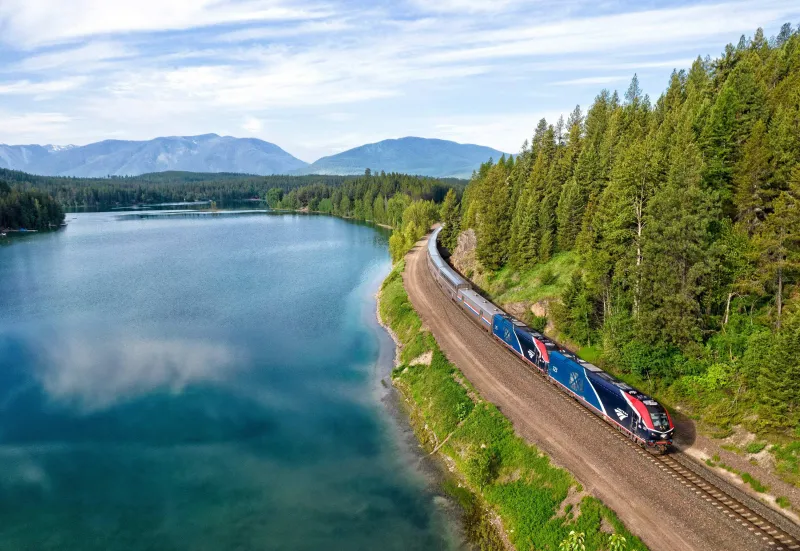
Photo: Amtrak train traveling through scenic American mountain landscape, via media.timeout.com
Let me say the uncomfortable part out loud: for most of us, flying is the single largest chunk of our personal carbon footprint, and no amount of reusable water bottles at the gate changes that. A single round-trip domestic flight can emit more CO2 than months of careful living.
But here's the thing I've come to believe after a decade of covering this stuff: the low-carbon vacation isn't a penance. Increasingly, it's just the better trip. Rail travel is having a genuine renaissance, EV road-tripping has quietly gone mainstream, and the best American cities were built to be explored without a car. Here's the honest guide.
The Train Is the Trip, Not the Transport
Amtrak's long-distance routes are America's most underrated travel product. The California Zephyr from Chicago to San Francisco Bay runs straight through the Colorado Rockies and the Sierra Nevada — arguably the most spectacular scenery in the country, viewed from a sightseer lounge with a drink in your hand instead of white-knuckled on I-70.
Other routes worth building a vacation around:
- Coast Starlight (Seattle to Los Angeles): Pacific coastline for miles, wine country stops in between.
- Empire Builder (Chicago to Seattle): the northern plains and Glacier National Park, right from the platform.
- Crescent (New York to New Orleans): a rolling cross-section of the South ending in the best food city in America.
Compare costs honestly: a coach seat on the Zephyr often runs $150–250, versus airfare plus a rental car plus a hotel room you'd need anyway. Take the train at night and your lodging is the ticket. The carbon math isn't close — rail travel emits a fraction of flying per passenger-mile.
The EV Road Trip Has Actually Arrived
Five years ago, an electric road trip meant range anxiety and a charging app open at all times. Today, fast chargers line the interstates, and EVs routinely outsell gas cars in states like California and Colorado.
The economics are the argument. Charging on the road typically costs a third to half of what gasoline does, and EVs skip oil changes entirely. Route suggestions that shine electric:
- Blue Ridge Parkway, Virginia to North Carolina — slow, scenic, and increasingly well-charged.
- Pacific Coast Highway — short daily distances, chargers at every tourist town.
- The Great River Road following the Mississippi — the kind of meandering trip where charging stops become the town you'd never have visited.
Renting? Hertz, Turo, and most major agencies now offer EVs, letting you test-drive the electric road trip before buying into it.
The Car-Free City Weekend
The cheapest and greenest trip of all is the one where you never pick up a rental car. New York, Chicago, Washington DC, San Francisco, Boston, and Portland are genuinely car-optional cities — Amtrak or a short flight in, then transit and shoe leather the rest of the way.
A weekend in Chicago via train from the Midwest can cost under $100 round trip. Add a museum pass, deep-dish pizza, and the lakefront trail, and you've got a vacation with a carbon footprint close to a weekend at home.
Offsets: The Straight Answer
You'll see 'carbon neutral' buttons on booking sites. Here's the candid truth: most offsets sold at checkout are weak. Forestry projects have a documented history of overpromising — trees that were never threatened, credits sold twice, forests that burned. If an offset is cheap and effortless, assume it's marketing.
What's more legitimate: offsets from verified standards like Gold Standard, focused on projects with measurable, audited outcomes. But honestly? Treat offsets as a last mile, not a license. A train ticket doesn't need absolution.
The Real Point
Somewhere along the way, we let the airport become the default gateway to 'getting away' — and the security line, the middle seat, and the rental car counter became the tax we all agreed to pay. The low-carbon vacation isn't about giving something up. It's about noticing that the train through the Rockies, the slow coastal drive, and the walkable city weekend were the better trips all along. The planet just happens to agree.