Butterflies vs. the Mower Blades: The Cheap Habit That's Stripping Our Roadsides Bare
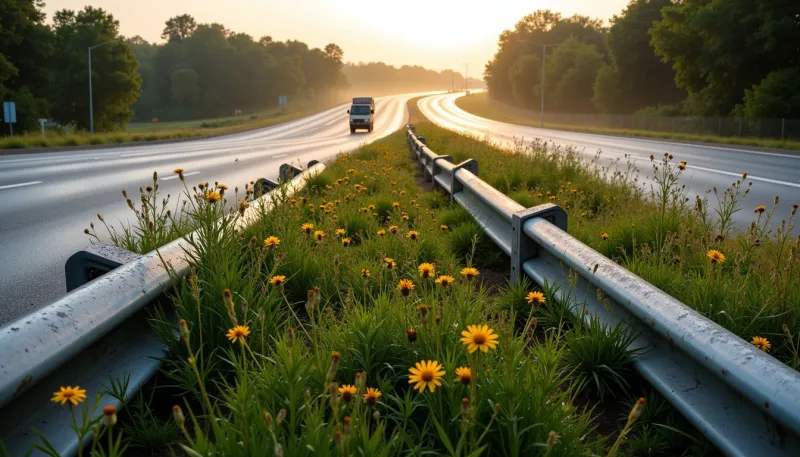
Photo: wildflowers blooming along roadside highway median, via images.stockcake.com
Picture a milkweed patch in full bloom along a two-lane highway in Ohio. Monarchs nectaring, bumblebees droning, goldfinches picking seeds. Then, on a Tuesday morning in May, a county mower rumbles through and flattens the whole thing in twenty minutes. Nobody wanted it mowed. It was just on the schedule.
That scene plays out thousands of times across America every year, and it's one of the quietest ecological losses in the country. Not because of bulldozers or pesticides — because of a maintenance calendar nobody has questioned in decades.
America's Strangest Refuge
Here's the irony: highway right-of-ways, utility corridors, and cemetery edges have accidentally become some of the last continuous stretches of untilled land in the continental US. Farms get plowed. Subdivisions get sodded. But that strip of ground between the shoulder and the fence line? For much of the last century, it just sat there, quietly collecting native seed from the surrounding landscape.
Researchers have found that roadside corridors can support surprisingly robust pollinator communities — sometimes more diverse than nearby agricultural fields. In the Midwest, they function as stepping stones for monarchs migrating between Mexico and Canada. In the Southeast, they shelter native bees that no longer find much forage in cotton and corn country.
Then the mowers come through. And it's not just the cutting itself. Routine mowing favors tough, low-growing grasses and clover while preventing wildflowers from ever reaching bloom. Mow a roadside twice a summer for ten years and you've effectively converted it to a green carpet — biologically a parking lot with better views.
The Economics of Pointless Mowing
Here's where it gets almost funny. Departments of transportation spend enormous sums keeping roadsides short. Studies from several state DOTs — Minnesota's is the famous one — have found that reduced mowing regimes save serious money. Minnesota's mowing legislation, which limits roadside mowing to specific windows and heights, has been credited with saving taxpayer dollars while leaving habitat standing.
So why does the old schedule persist? Habit, mostly. Mowing looks tidy. A resident complains about 'weeds,' and a supervisor, who'd rather not argue, sends a mower. Tidiness is a policy, even when nobody wrote it down.
The Reforms Already Rolling
The good news is that this is one of the easiest environmental fixes in America, and it's already happening:
- Iowa, Minnesota, and other Midwest states have passed mowing restrictions on roadside right-of-ways, protecting habitat until after the nesting and blooming season.
- No Mow May, started in the UK and now spreading through US municipalities from Wisconsin to Utah, asks homeowners and cities to let lawns grow for a single month so early-season pollinators can find food.
- Several state DOTs have adopted targeted 'reduced mowing zones' — full mowing only near intersections and signs where sightlines matter, with everything else left to grow.
None of this means letting roadsides become brushy hazards. Safety mowing near signs, curves, and intersections stays. What changes is the blanket policy of mowing everything, everywhere, on a schedule set in 1975.
Your One Phone Call
You don't need a nonprofit, a petition platform, or a science degree to change this in your own county. You need one phone call — ideally to your county commissioner or state DOT district office.
Here's the script that works:
- Lead with money, not monarchs. Ask what the county spends annually on roadside mowing, and whether they've reviewed reduced-mowing programs in neighboring states. Fiscal framing opens doors that 'save the bees' sometimes doesn't.
- Offer the safety carve-out up front. Say explicitly: mow near intersections, keep sightlines clear. This tells the commissioner you're serious, not sentimental.
- Name the model. Mention Minnesota's roadside mowing law or your state's existing No Mow May resolutions by name. Bureaucrats love precedent.
- Follow up in writing. A short email after your call creates a paper trail — and a paper trail creates accountability.
If you want backup, bring one friend to the next public comment period. That's genuinely it. In many counties, roadside mowing policy has never once been discussed in a public meeting. The first person to raise it is often the person who changes it.
What Success Looks Like
Drive through a county that's adopted reduced mowing in July and you'll see it: black-eyed Susans nodding in the median, milkweed standing tall on the shoulder, and — this is the part that matters — a monarch finding it. These corridors stitch fragmented habitat back together, one unmowed margin at a time.
We spend so much time worrying about the big climate levers that we forget some wins are sitting right along the road, waiting for someone to pick up the phone. The mower has had its century. Maybe it's time to let the wildflowers have the shoulder.