From Your Front Yard to a Fishless Lake: The Fertilizer Pipeline Nobody's Talking About
Picture a summer afternoon in any American suburb. Sprinklers tick across perfectly manicured lawns. A neighbor drags a spreader loaded with granular fertilizer across his grass. Kids play in the street. Everything looks idyllic — healthy, even.
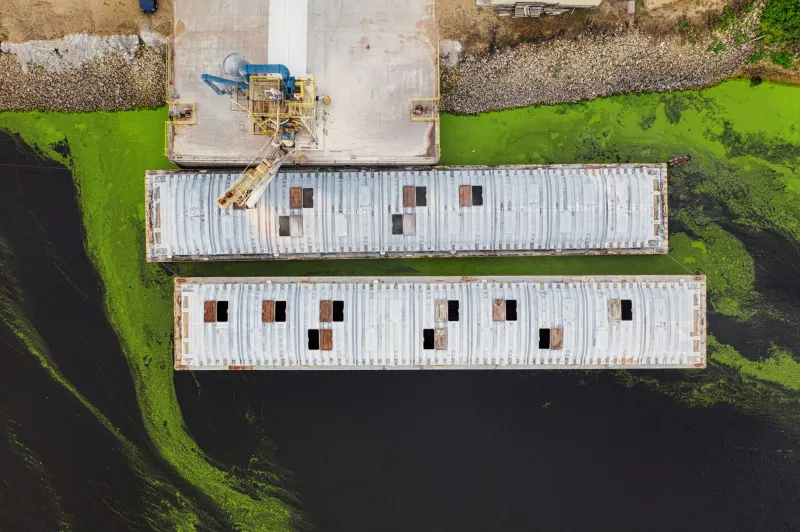
Now fast-forward a few days and travel downstream. A lake that once teemed with bass and bluegill sits glassy and still. Algae coats the surface in a sickly green-brown mat. Beneath it, the water holds almost no oxygen. Fish have fled or died. Insects are gone. The lake, for all practical purposes, is a desert.
These two scenes are connected. And that connection is one of the most underreported environmental stories unfolding across the United States right now.
The Chemistry of Catastrophe
To understand what's happening, you need to know a little about eutrophication — a word that sounds technical but describes something devastatingly simple. When excess nutrients, primarily nitrogen and phosphorus, pour into a body of water, aquatic plants and algae go into overdrive. They multiply explosively, blanketing the surface and blocking sunlight from reaching underwater vegetation. When those algae eventually die, bacteria decompose them — and that decomposition process consumes enormous amounts of dissolved oxygen.
The result is hypoxia: oxygen levels so low that most aquatic life cannot survive. Fish suffocate. Invertebrates vanish. The food web collapses from the bottom up. Scientists call these areas "dead zones," and the name is brutally accurate.
The Gulf of Mexico hosts one of the largest dead zones on the planet, stretching thousands of square miles off the coast of Louisiana every summer. Agricultural runoff from the Mississippi River basin is the primary driver — but residential fertilizer use is a significant and frequently overlooked contributor to the broader nutrient pollution crisis affecting lakes, rivers, and estuaries in every region of the country.
How Your Lawn Becomes a Pollution Source
Here's the uncomfortable math. The average American lawn receives somewhere between three and five pounds of nitrogen per thousand square feet each year, according to estimates from the Environmental Protection Agency. Across the roughly 40 million acres of turf grass in the United States — more land than is used to grow corn, wheat, or any other single crop — that adds up to a staggering quantity of reactive nitrogen and phosphorus entering the environment.
Grass roots can only absorb so much. Studies suggest that between 20 and 50 percent of applied fertilizer never reaches the plant at all. It sits on the surface, waiting for rain. When that rain arrives, it carries dissolved nutrients across driveways, down storm drains, and into the nearest waterway — often without any filtration whatsoever. Unlike agricultural runoff, which occasionally passes through wetlands or riparian buffers, suburban runoff frequently flows straight from pavement into pipes and then directly into streams.
Phosphorus, which binds tightly to soil particles, hitchhikes on eroded sediment. Nitrogen, more water-soluble, moves freely with every drop of rain. Together, they're a one-two punch that overwhelms aquatic ecosystems that evolved over millennia without this kind of nutrient loading.
The Marketing Machine Behind the Green Lawn
None of this happened by accident. The American obsession with the chemically perfect lawn was, to a significant degree, manufactured.
After World War II, chemical companies that had been producing synthetic nitrogen for munitions pivoted to agriculture and, eventually, consumer lawn care. The same marketing machinery that sold Americans on processed food and single-use plastics went to work on grass. Lawn care became a moral issue — a reflection of personal responsibility, civic pride, neighborhood standards. Homeowners associations codified it. Suburbs enforced it socially.
Today, the lawn care industry generates more than $100 billion annually in the United States. A significant portion of that revenue comes from products that, used as directed, contribute directly to the degradation of the water bodies that communities depend on for drinking water, recreation, and wildlife habitat.
Fertilizer bags rarely mention dead zones. They don't show images of algae-choked lakes. They show children running barefoot across thick, emerald grass. The environmental cost is invisible at the point of sale — and that invisibility is, in many ways, the product.
The Scale of the Damage
The numbers are hard to sit with. The EPA has identified more than 166 documented hypoxic zones in U.S. coastal and estuarine waters. Thousands of inland lakes across the Midwest, Southeast, and Mid-Atlantic face recurring algal blooms, some of which produce cyanotoxins dangerous to humans, pets, and wildlife. In Florida, harmful algal blooms linked to nutrient pollution have repeatedly triggered public health emergencies and caused mass fish kills that left beaches littered with rotting marine life.
The economic consequences are real, too. Fisheries collapse. Tourism dollars evaporate. Property values around degraded water bodies decline. Municipalities spend millions treating drinking water contaminated with nitrogen compounds linked to health risks including certain cancers and, in infants, a potentially fatal condition called methemoglobinemia.
What Restoration Actually Looks Like
Here's where the story gets hopeful — because the same lawns that contribute to this crisis can become part of the solution.
Soil testing before fertilizing is the single most impactful individual action most homeowners can take. Most American lawns are over-fertilized, not under-fertilized. A soil test, available through most county cooperative extension offices for under $20, tells you exactly what your lawn actually needs. In many cases, the answer is: less than you're applying, or nothing at all.
Transitioning to native plants reduces or eliminates fertilizer dependence entirely. Native grasses, wildflowers, and groundcovers evolved in local conditions and thrive without chemical inputs. They also build deeper root systems that absorb rainfall rather than shedding it, dramatically reducing runoff.
Rain gardens and bioswales — shallow depressions planted with water-tolerant native species — intercept runoff before it reaches storm drains. A well-placed rain garden can capture and filter thousands of gallons of stormwater annually, stripping out nutrients before they reach waterways.
Organic and slow-release fertilizers, used judiciously based on actual soil needs, release nutrients gradually rather than flooding the soil with a surge that overwhelms plant uptake. They're not a perfect solution, but they dramatically reduce the pulse of nutrients that follows heavy rain.
Leaving a buffer of unmowed vegetation along any water feature — even a backyard pond or drainage ditch — creates a natural filter that intercepts nutrients before they enter the water. Even a three-foot buffer makes a measurable difference.
The Bigger Picture
It would be easy to frame this as a story about individual choices, and individual choices do matter. But the scale of nutrient pollution in American waterways is also a policy failure. Many states still lack meaningful restrictions on residential fertilizer application near waterways. Stormwater infrastructure in most cities was built without any expectation of nutrient filtration. Zoning laws and HOA rules often actively discourage the native plantings and natural landscaping that would reduce runoff.
Advocating for local fertilizer ordinances, supporting watershed protection programs, and pushing back on HOA rules that mandate chemical-intensive turf are all meaningful forms of engagement — ones that multiply the impact of whatever you're doing in your own yard.
The dead zones in America's waters didn't form overnight. They accumulated through decades of normalized chemical use, inadequate infrastructure, and a cultural story that equated a poisoned lawn with a healthy home. Reversing that damage will take time. But it starts with understanding the pipeline — and deciding you don't want to be part of it anymore.