That Little Recycling Arrow Is Lying to You — The Truth About Plastic Bottles in America
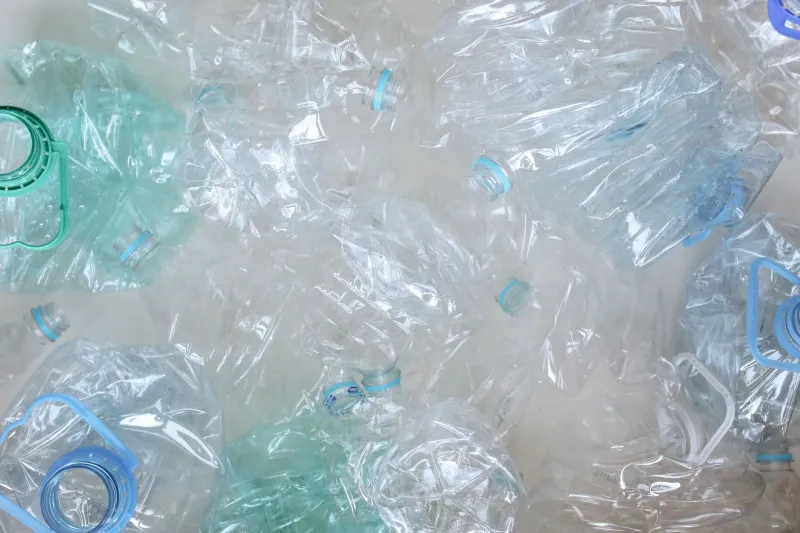
There's something almost ritualistic about it. You finish a bottle of water, give it a quick rinse, maybe even flatten it, and drop it into the recycling bin with a small sense of satisfaction. You did the right thing. The bottle will become something new. The planet breathes a little easier.
Except — it probably won't. And it probably didn't.
The recycling symbol stamped on your water bottle is one of the most misleading pieces of consumer communication in modern American life. It doesn't mean the bottle will be recycled. It means the bottle could be recycled — under the right conditions, in the right facility, if the market wants it, if it isn't contaminated, and if a dozen other stars align just right. Spoiler: they usually don't.
The Gap Between the Label and the Landfill
Here's the number that should stop you cold: the United States recycles less than 30% of its plastic bottles. That means roughly 7 out of every 10 bottles you dutifully toss in the blue bin end up in a landfill anyway — or worse, incinerated or shipped overseas to countries with even less infrastructure to handle them responsibly.
For years, a significant chunk of American recyclables were exported to China. When China implemented its National Sword policy in 2018, essentially slamming the door on low-quality plastic imports, U.S. recycling programs were thrown into chaos. Municipalities that had built entire waste management strategies around that export market suddenly had nowhere to send materials. Some cities quietly started routing "recycling" directly to landfills. Others just stopped collecting certain plastics altogether.
Most consumers never heard a word about it.
Why Sorting Facilities Can't Keep Up
Even when your bottle makes it to a materials recovery facility (MRF, pronounced "murf" in the industry), the odds aren't great. These facilities rely on a mix of human sorters and automated machinery — optical scanners, air jets, conveyor belts — to separate plastics by resin type. PET bottles (that's your standard water bottle, labeled #1) are actually among the more recyclable plastics, but the system still fails them regularly.
Contamination is a massive problem. One greasy pizza box can ruin an entire bale of otherwise recyclable material. Bottle caps made from a different plastic than the bottle itself cause sorting headaches. Labels that don't separate cleanly gum up machinery. And because recycling facilities are often underfunded and understaffed, quality control suffers.
Then there's the economics. Recycled PET plastic has to compete with virgin plastic — the stuff made fresh from petroleum — which is often cheaper to produce, especially when oil prices are low. When the market for recycled resin dries up, facilities have no buyer. The material piles up, costs money to store, and eventually gets landfilled anyway.
The recycling symbol on your bottle? It was actually designed by the plastics industry in the early 1970s — not as a guarantee of recyclability, but as a coding system for resin types. It got co-opted into a feel-good environmental symbol, and the industry has never been in a rush to correct that misunderstanding.
Corporate 'Recyclable' Claims: Read the Fine Print
When a beverage company advertises that its bottles are "100% recyclable," that statement is technically accurate and almost entirely misleading. Recyclable describes a material property, not a guaranteed outcome. It's like saying your car is "capable of going 120 mph" — sure, in theory, under specific conditions, but that's not what's happening on your morning commute.
Several major beverage corporations have faced scrutiny and even legal challenges over these kinds of claims. The Federal Trade Commission's Green Guides are supposed to keep environmental marketing honest, but enforcement has been inconsistent, and the guidelines haven't been updated since 2012. Meanwhile, companies continue to use recyclability as a central plank of their sustainability messaging, which lets them sell more single-use plastic while pointing the finger at consumers for not recycling correctly.
It's a neat trick. And it's worked remarkably well for decades.
So What Actually Works?
The good news is that you're not powerless here — you just need to redirect your energy away from the recycling bin and toward upstream solutions that actually prevent waste from being created in the first place.
Invest in a quality reusable bottle. This is the single highest-impact swap you can make. A stainless steel or glass water bottle used consistently over a few years offsets hundreds of single-use bottles. Look for brands with strong sustainability commitments and avoid cheap plastic "reusables" that wear out quickly and end up in the trash anyway.
Filter your tap water at home. A pitcher filter or an under-sink filtration system gives you clean, great-tasting water without the plastic. Brands like Brita and ZeroWater offer affordable pitcher options, while systems like Berkey or Clearly Filtered provide more robust filtration for households with tap water concerns. The upfront cost pays for itself fast compared to buying bottled water.
Use community refill stations. Many gyms, airports, parks, and public buildings now have bottle refill stations — those fountains with the counters that show how many plastic bottles have been "saved." Use them every chance you get. Some cities are even installing outdoor hydration kiosks in high-traffic neighborhoods. If yours doesn't have them, that's a great thing to advocate for at your next city council meeting.
Support refill and reuse programs. A growing number of companies and local businesses are building refill ecosystems — think Loop, or the growing network of refill shops where you bring your own containers for everything from cleaning supplies to shampoo. These systems are genuinely circular in a way that recycling rarely is.
Push back on the source. Write to your favorite beverage brands and ask what they're doing to reduce single-use plastic — not recycle it, reduce it. Support legislation like bottle deposit programs (which dramatically increase actual return and recycling rates) and extended producer responsibility laws that make companies financially accountable for the waste they generate.
Rethinking What 'Doing Your Part' Really Means
For a long time, recycling has been the environmental movement's comfort food — easy, familiar, and ultimately not as nourishing as we thought. The three R's were always meant to be ranked: Reduce first, Reuse second, Recycle third. Somewhere along the way, we inverted that hierarchy and let recycling carry the whole load.
It can't. The infrastructure doesn't exist, the economics don't support it, and the corporations profiting from single-use plastic have little incentive to change the system on their own.
But you can opt out of it. Every refillable bottle you carry, every filter pitcher you fill, every refill station you use — that's a bottle that never had to be made in the first place. No sorting facility required. No market fluctuations. No greenwashed label doing the work of real accountability.
The most powerful recycling is the kind that never has to happen at all.